



In a city where schools are too often described in terms of crisis, Kyle Smitley has built something different and quietly powerful.
Her two charter public schools, Detroit Achievement Academy and Detroit Prep, are not just beating the odds. They are showing what is possible when high expectations, whole-child learning, and deep community roots come first.
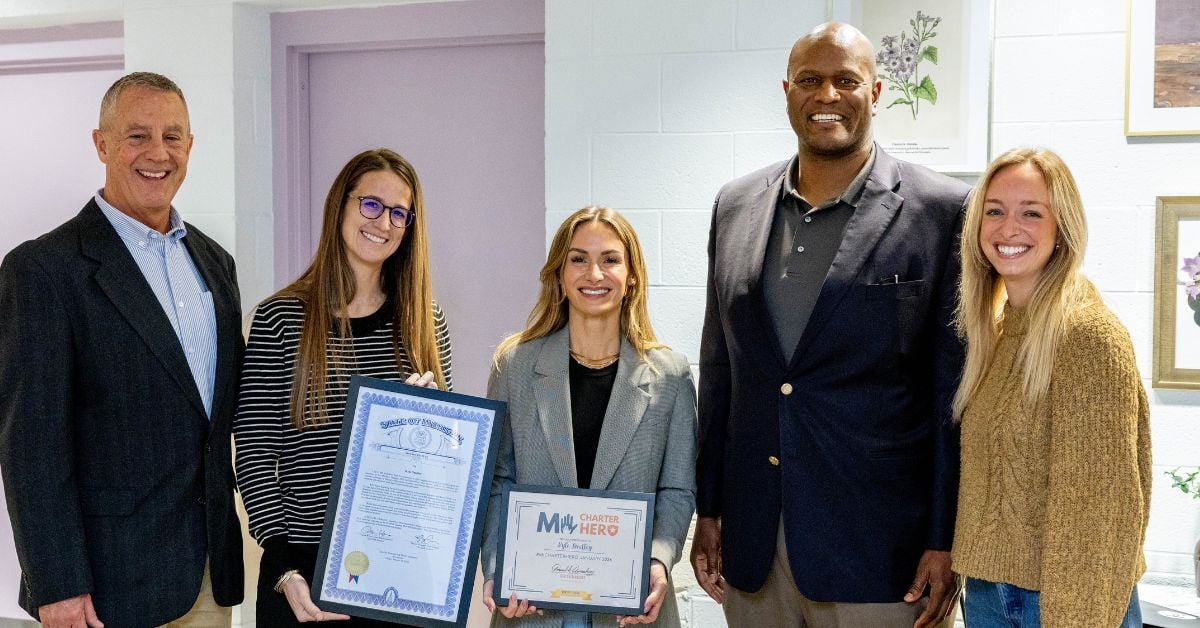
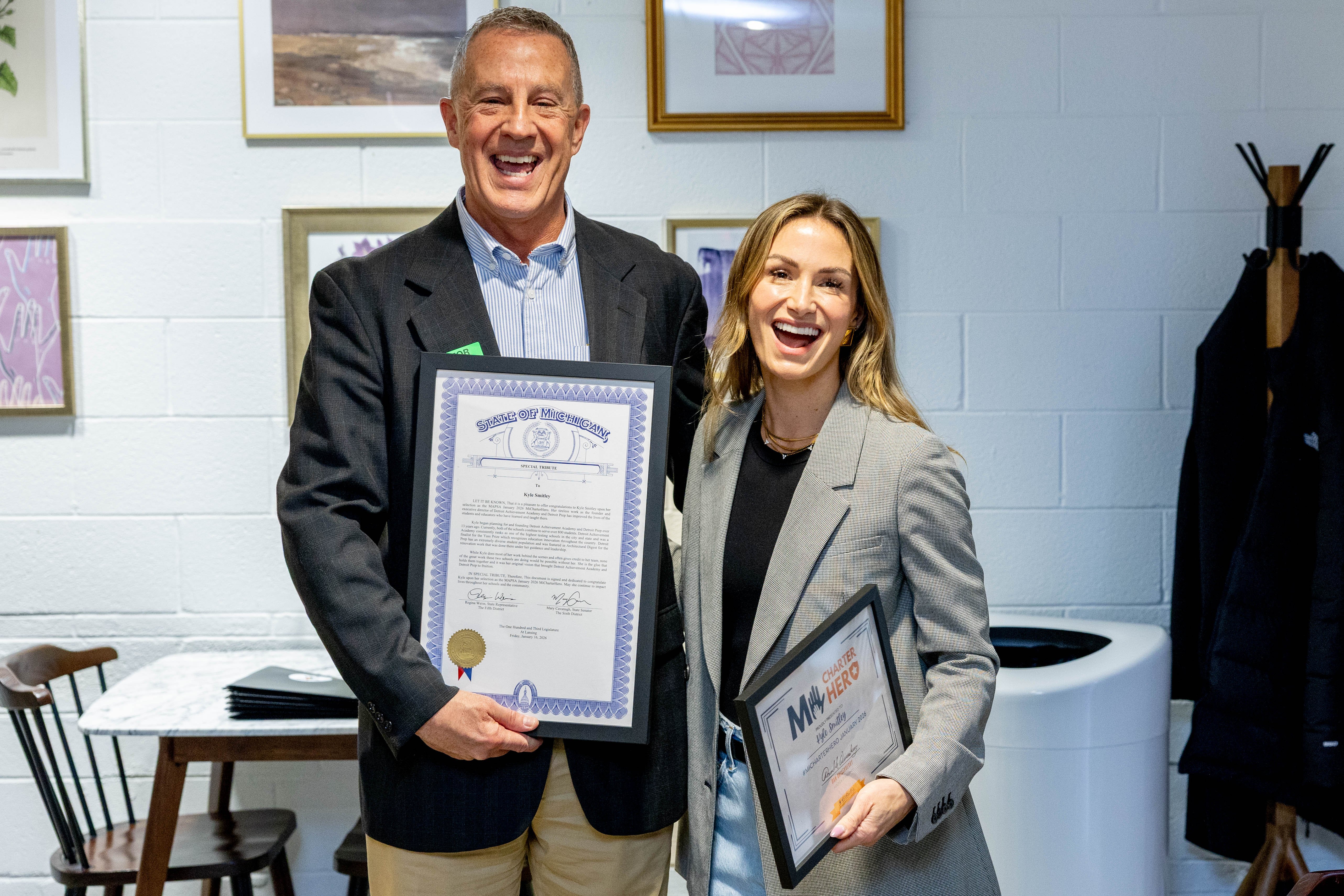
Last week, we gathered inside one of her schools and surprised Kyle with the MiCharter Hero Award. For anyone who has spent time in her hallways, it felt less like a surprise and more like long-overdue recognition.
Detroit Achievement Academy, authorized by GVSU, began inside the historic Bushnell Congregational Church at Southfield and Grand River, a building that once played a role in Detroit’s Civil Rights Movement.
In those early years, Kyle and her team stretched every dollar. They “shook all the couch cushions” to purchase their building on land contract. In 2015, they refinanced and invested what felt like an astronomical $250,000 into paint, lighting, and improvements they could afford without triggering costly permits..jpg?width=1200&height=628&name=Blog%20Header%20Image%20Resizing%20(2).jpg) The results were an environment that anybody would want to work in, with color and art thoughtfully guiding students. The space is curated to foster belonging and high-quality work.
The results were an environment that anybody would want to work in, with color and art thoughtfully guiding students. The space is curated to foster belonging and high-quality work.
Growth did not happen overnight. It happened with patience, discipline, and a clear sense of purpose. Today:
While many schools focus narrowly on test scores, Kyle built her schools around three commitments:
The schools even removed test-based metrics from their five-year plan, stating clearly that children are more than numbers.
At the same time, the numbers tell a compelling story.
Across grade levels and subjects, the schools outperform regional peers, often by double digits. Compared to Detroit Public Schools, the gap averages nearly 30 percentage points. Among students who qualify for free and reduced lunch, the advantage remains strong.
Whole-child design here does not replace academic rigor. It strengthens it.
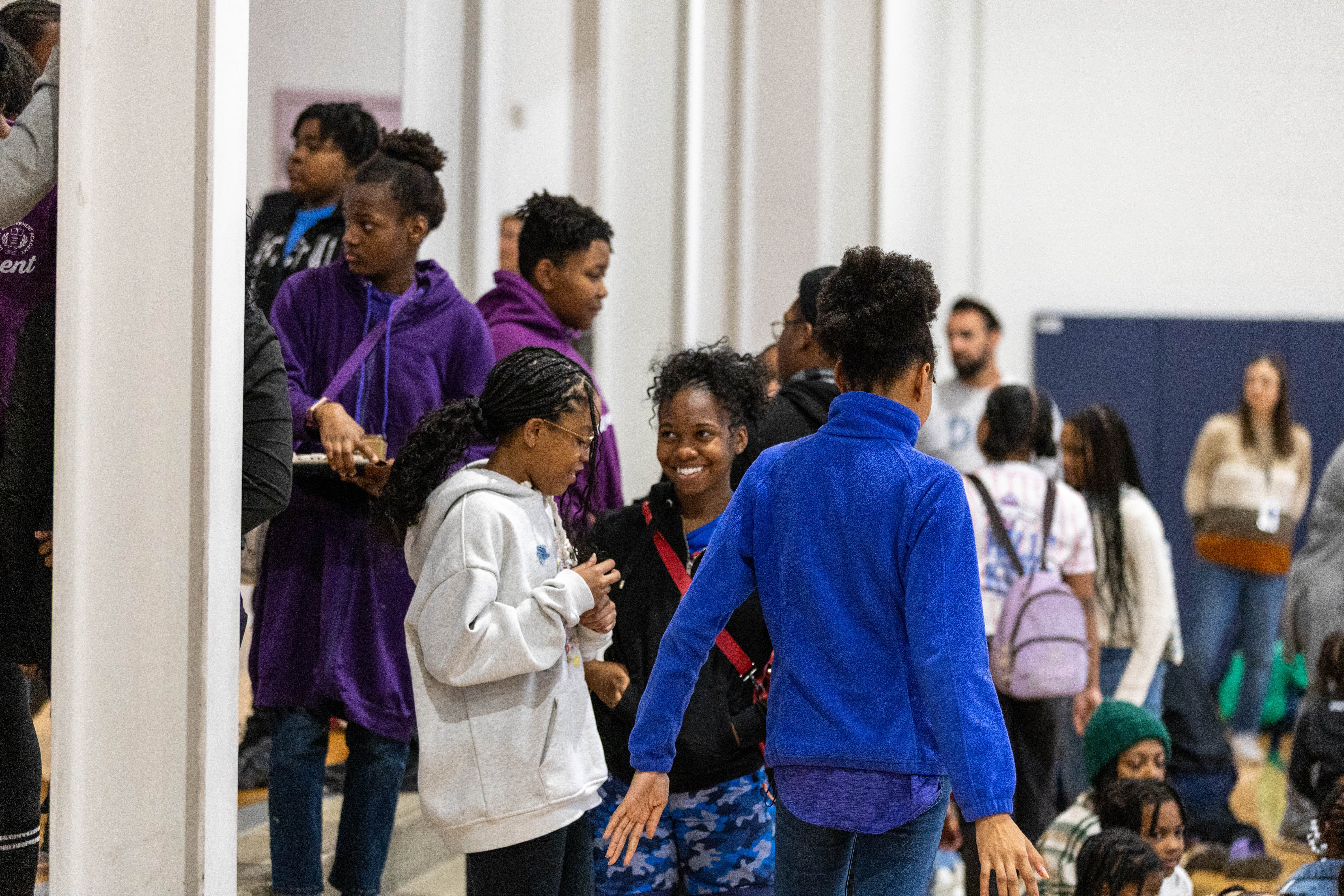
During our visit, the entire school gathered together for a Monday and Friday tradition called Community Crew. Students greeted one another by name. They shared reflections, celebrated wins, and set intentions for the week. There was laughter. There was vulnerability. There was structure, but it felt authentic rather than scripted.
It was clear that this was not a program layered onto the school day. It was a ritual. A shared rhythm. A way of making sure every student begins the day feeling like they belong.
.jpg?width=1200&height=628&name=Blog%20Header%20Image%20Resizing%20(1).jpg)
Throughout the week, smaller classroom crews continue that work, creating space for belonging, accountability, and honest reflection. You can feel the impact in the hallways. Students speak with confidence. They offer thoughtful feedback. They take ownership of their learning. Kyle mentions, “The level of critique students give and accept would make many adults uncomfortable.” For these students, it is simply part of learning.
Academics are not built on worksheets. They are built on meaningful, interdisciplinary projects.
Students:
Kyle calls it “sneaking the vegetables into the cake.” We call it project-based learning. This style of instruction allows students to be deeply engaged while mastering rigorous content.
Multiple drafts are expected. Direct feedback is normal. Public presentation is routine. Detroit Achievement Academy students consistently excel in presentation-based competitions like Lego Robotics.
The same philosophy around meaningful student participation appears in family engagement.
In a typical student-led conference, the student speaks for nearly the entire meeting, walking their family through goals, work samples, successes, and areas for growth. The teacher steps in briefly to provide context and next steps.
The message is simple. Students should understand and articulate their own learning better than anyone else can do it for them.
Families travel from across metro Detroit to attend. Some even relocated to the neighborhood during COVID rather than leave the community they found here.
Still, these schools were designed as neighborhood schools first, with systems built around local families and transportation routes focused on real barriers rather than convenience.
When you isolate data for students who are low-income or facing housing instability, the performance advantage does not shrink. These two schools are showing a 29% advantage in test scores compared to local district options.
Kyle has appeared on national platforms, including Forbes, and The Ellen DeGeneres Show, speaking about equity and school design. But her most important work is not on a stage. It is in the hallways and lunchrooms of these extraordinary schools.
According to Kyle, her schools offer something powerful and practical, and measurable:
Belonging.
Not as slogans, but as daily commitments.
The MiCharter Hero Award recognizes what Detroit families already know. When we refuse to accept “good enough” for other people’s children, something extraordinary becomes possible.
One crew. One classroom. One cohort at a time.
No Comments Yet
Let us know what you think